First author
Research question
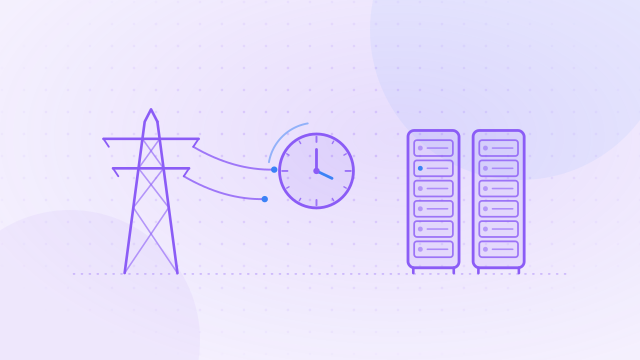
What does it cost when a large AI data center must wait for grid energization, and how does the delay affect the developer, electricity ratepayers and society?
Key insight
The cost of delayed grid energization depends on who is counting
A late grid connection costs the developer lost margin and carrying costs; ratepayers face utility carrying and stranding costs; society bears external costs. I keep these present-value accounts separate. In the study, a 36-month delay for a 300 MW-IT facility cost the developer on the order of $0.7 billion, while ratepayer exposure depended strongly on large-load tariff design.
My contribution
First author. I did most of the work: the framework, the model, the analysis and the writing.
How I approached it
ChallengeDelay costs fall on different parties, and a single total hides who pays.
What I didI priced the delay in three separate present-value ledgers (developer, utility ratepayers and society) with a net-benefit test that states when they may be combined.
Why it matteredAn acceleration option can then be judged against what it saves each party and what it costs.
ChallengeDelay costs of projects with different sizes and waits are hard to compare.
What I didI defined two metrics: a delay cost intensity per MW-month, and a break-even acceleration payment for options that shorten the wait.
Why it matteredThey make results comparable across project sizes, delays and mitigation options such as staged service or bridge power.
ChallengeInputs are uncertain, and the length of a delay and whether a project goes ahead may be linked.
What I didI screened inputs with Latin hypercube sampling and rank correlations, and stress-tested the dependence between delay and realization and the large-load tariff.
Why it matteredThe parameters are illustrative, so the study reports which inputs move the result, not a single forecast.
Design choices
- Treat the delay as given
- Alternatives considered: modeling the interconnection process that causes itThe framework prices the consequences of late service; why service is late, and network feasibility, are outside its scope.
Method
Present-value framework that converts delayed IT capacity into grid capacity requirements and prices the delay in separate developer, ratepayer and social ledgers, summarized by a delay cost intensity and a break-even acceleration payment; sensitivity and dependence stress tests.
Key findings
- For a 300 MW-IT facility, a 36-month delay costs the developer on the order of $0.7 billion in present value.
- Staged energization can recover a large share of that cost.
- Ratepayer exposure depends strongly on large-load tariff design.
Boundary conditions
The delay is treated as exogenous and parameters are illustrative; network feasibility is not modeled, and the social perspective is illustrated with a single bridge-power example.
Publications
-
NAPS 2026Quantifying the Cost of Delayed Grid Energization (CoDE) for AI Data Centers2026 North American Power Symposium (NAPS), 2026. Accepted
@inproceedings{li2026code,
  title     = {Quantifying the Cost of Delayed Grid Energization ({CoDE}) for {AI} Data Centers},
  author    = {Li, Honglin and She, Buxin},
  booktitle = {2026 North American Power Symposium (NAPS)},
  year      = {2026}
}
Outputs
Reproducibility
Model framework with documentation, examples and tests on GitHub; the study's own parameter files and results are archived privately.
Last updated 2026-10